
SPECIALTY
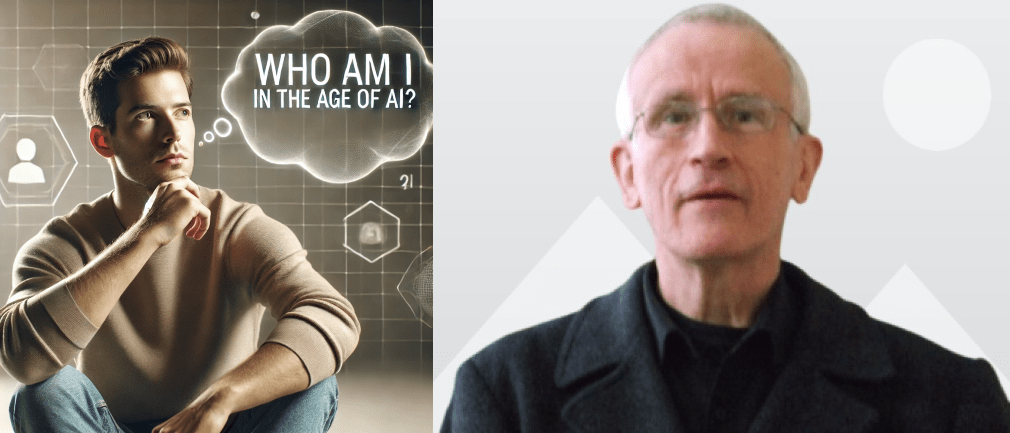
I created an audio file using Google Notebook LM in which a man and woman dive deeply into my About Me page. It’s an excellent rendition, IMHO.

Summary by AI Summarizer
Title: RLK Reflections: A Dive Into AI, Spirituality, and More
Introduction:
The content revolves around Randy Kemp, who shares insights from his life, particularly focusing on his background, interests in AI, and spiritual journey. He discusses the integration of technology and spirituality, emphasizing interdisciplinary learning.Key Points:
- Background and Experience:
- Randy Kemp has a varied background in software engineering, Six Sigma, writing, and AI.
- He considers himself a perpetual student and has authored content in the tech and B2B sectors.
- His educational qualifications include a BA in mathematics, an AA from the College of DuPage, a master’s in psychology, and extensive studies in various languages and disciplines.
- Focus on AI:
- Kemp uses multiple AI tools like ChatGPT, Bing Co-Pilot, and Google Gemini for creative and professional purposes.
- He emphasizes the importance of providing AI with the right prompts to achieve desired outcomes.
- Kemp has completed courses in AI fundamentals, enhancing his understanding of the technology.
- Spiritual Journey:
- Kemp explores spirituality through various traditions, including Quakerism, Eastern Orthodoxy, and Catholicism.
- His spiritual practices include meditation and contemplation, influenced by his involvement with the Theosophical Society and other diverse spiritual communities.
- He believes there can be a coexistence of AI and spirituality.
- Integration of Knowledge:
- Kemp advocates for a curious mindset and interdisciplinary learning, reflecting on the value of understanding multiple perspectives.
- He shares a broad range of resources, including videos and articles, to help illustrate complex concepts in AI and spirituality.
- Engagement and Collaboration:
- Kemp invites guest bloggers with writing and marketing credentials to contribute to his platform.
- He encourages readers to connect with him via social media and submit articles for his review, using tools like Grammarly for edits.
Conclusion:
Randy Kemp’s reflections illustrate his commitment to combining technology and spirituality as part of his life’s journey. He advocates for continual learning and collaboration, inviting others to explore and share their insights through his platform. His unique experiences and perspectives offer a rich tapestry of knowledge, encouraging curiosity and open-mindedness in both AI and spiritual explorations.
They say you know a language when you can dream in that language. Does this mean one understands AI when they can dream in binary ones and zeros?
Let’s first look at a thought-provoking video, shall we?
See my analysis at Christopher Langan: Exploring Intelligence and Reality with AI Analysis – RLK-Reflections.
Summary by Google Gemini:
The YouTube video discusses the cognitive theoretic model of the universe (CTMU) by a man with a reported IQ between 195 and 200. The CTMU, his “Theory of Everything”, posits that reality has an identity, which he equates to God, and is “logico-geometric,” a blend of linguistic and geometric aspects. The CTMU suggests that language, the universe, and the model connecting them are the same, distributed throughout reality, aiming to find absolute truths. The discussion also covers topics like consciousness, quantum physics, free will, causation, life after death, and the reality of the non-physical, including the existence of angels, demons, and the Devil. The video includes timestamps such as [02:34] to reference parts of the video.
Now, I’m diving deep into AI. I just need to give AI models the right prompts, so they understand stuff – unlike in this video clip:
—> Here’s a bit of my background. <—
- Retired former software manuals, case studies, white paper, content, direct response writer, Six Sigma Black belt; System Analyst/ Software Engineer; AI user, perpetual student.
- This is the Reader’s Digest bio version: Randy Kemp – Carol Stream, Illinois USA, B2B Tech Copy, AA-College of Dupage, BA – Aurora University, MA-Norwich University | about.me
- “RLK Bares All: Intimate Reflections from the Mind of RLK Revealed!”
- This short two-minute AI YouTube video will present my background. Background of Randy Kemp
- Former owner, writer, chief cook, and bottle washer at B2B-TechCopy – Technology Marketing Blog (b2btechcopy.com) (Like the artist formerly known as Prince).
- RLK-Reflections – Here, I share reflections from myself as RLK.
- Biography of Randy Kemp (youtube.com)

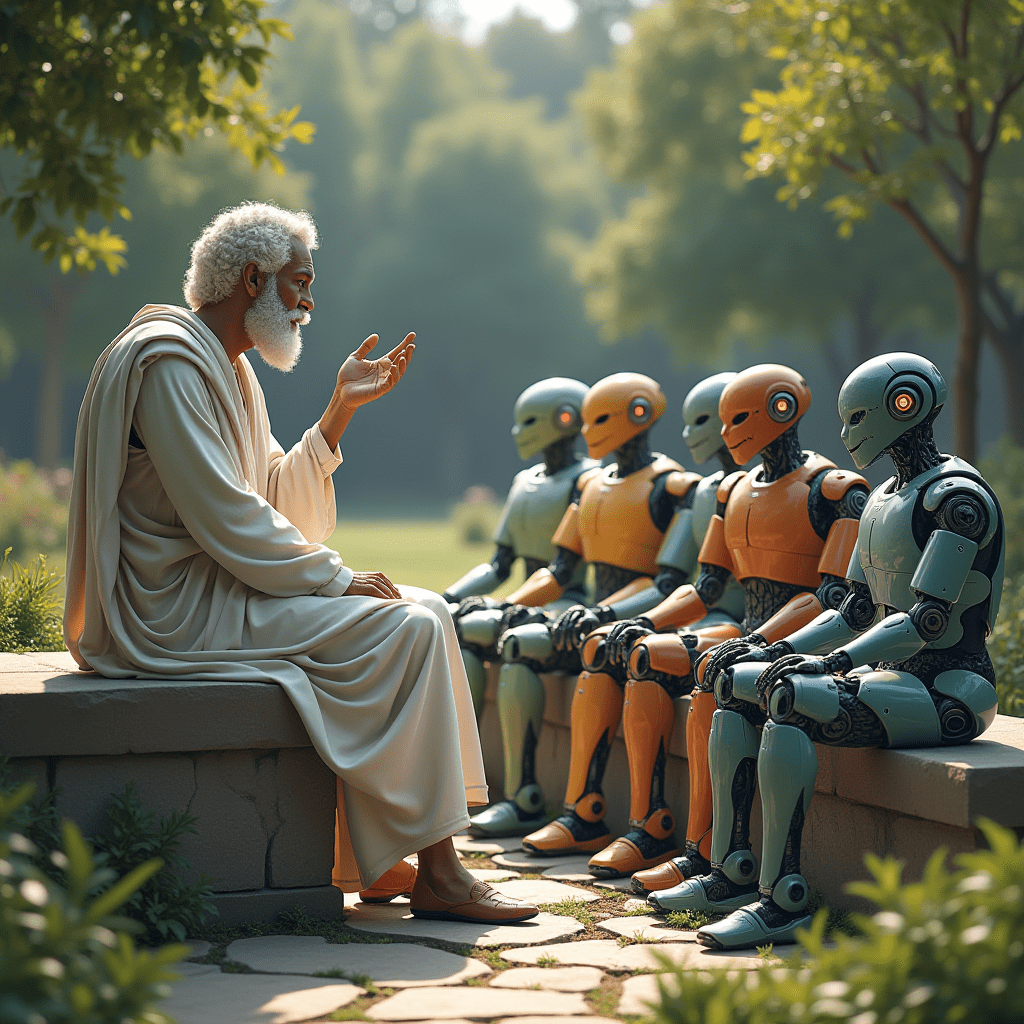
When I majored in math many moons ago, I relied on Schaumn’s Outline Series of books to aid me with my major. I viewed various videos that covered the topic from multiple angles to understand AI. However, I paused and asked multiple AI engines like X’s Grok, Deep Seek hosted by Gab AI, ChatGPT, Meta AI, Bing Co-Pilot, Google Gemini, and Claude AI to explain a specific concept and give some simple examples. It brought back memories of Schaumn’s Outline Series.
Credentials

–> My academic and life learning experience <–
I have studied some diverse academic disciplines.
- I obtained a BA in math from Aurora University
- I have an AA from the College of DuPage, where I took extensive courses in Literature, philosophy, creative writing, and computer programming after my BA degree.
- A master’s in psychology at Norwich University
- Studied homeopathy for many years with the author of Homeopathy in Practice: Clinical Insights into Remedies (Vol. 3): Husain, Iqbal: 9781662403491: Amazon.com: Books
- Studied spirituality with experts giving presentations and talks at the Theosophical Society in America
- I dabble in the French, Spanish, Portuguese, and Mandarin languages.
- Now, I am studying AI. It would be best if you gave an AI model the correct prompt. Let’s illustrate this error visually so we can understand. You make the phone call, and the AI model interprets it:

Remember The Wizard of Oz scene with the loud voice, flashing lights, and sound effects? Well, they say curiosity kills the cat. But I wanted to see how the man and machine behind the curtain worked.
–> My AI Training <–
- Randy Kemp’s badge for completing IBM’s Artificial Intelligence Fundamentals
- Academy Accreditation – Generative AI Fundamentals • Randy Kemp • Databricks Badge
- Achievements – RandyKemp-5990 | Microsoft Learn – Fundamentals of Generative AI
My background in software engineering with Oracle and MySQL databases, math B, A, and Motorola Six-Sigma probability and statistics background, as well as my experience with languages like Java, C++, and Python, help me understand AI’s inner workings.
There are The Seven Samari, The Magnificent Seven, and The Dead Seven. This is my version of The Magnificent AI Seven.
- Qwen
- ChatGPT
- Microsoft Copilot: Your AI companion
- Gemini
- Meta AI
- Claude
- Grok
- DeepSeek – Into the Unknown


–> Here is a good lesson about AI models <–
Here’s a lesson on AI models. If two folks are having a “dialogue” and shooting articles around, let AI models be the judge. They are not emotional.
On any article you find, use this tool to extract text: Convert Web Pages to Plain Text | Great for ChatGPT + SEO Use
Could you ask it two questions or prompts.
- Please summarize this article:
- What do you think of the article?
I just did an interesting experiment. I took this old philosophical puzzle: If a tree falls in the forest and nobody can hear it, does it make a sound? I asked this of four AI models. Using at least three changes your odds of getting the correct answer:
- Bing Copilot’s ‘Deep Think” option, which uses Open AI O1.
- Google Gemini.
- Mistral AI (from France)
- Deep Seek (from China)
The results were the same for all models. You could also invoke it as a Zen Koan and use it as a puzzle for enlightenment.
Inspiration

–> My AI Usage <–
- I use multiple AI engines to help develop blog posts. I like the Microsoft term co-pilot, which means I am the pilot. AI can give me ideas, outlines, blog post summaries, graphic design, tweak writing, etc., but I’m still the creator or pilot. I like to consult more than one AI on various questions or topics. Here are some simple AI explanatory articles.
–> We need a bit of Nerd humor, in dealing with life and AI. <–
- I still believe in nerd and geek culture, infused with a sense of humor.
Can AI and spirituality co-exist? I think so.

Summary by Randy Kemp
I’m a conservative Eastern Catholic, Buddhist – mystic – Yogi — minus any metaphysics, hopeful universalist — and an AI nerd striving to achieve Fr. Richard Rohr’s ‘non-dual mind ‘ with help through silent contemplation and spiritual healing methods. I’ve gained much insight from Fr. Richard Rohr, Fr. Ron Roth, the Byzantine and East Syriac rite churches, and virtual and in-person programs at the Theosophical Society in America.
- The most crucial church lesson I learned is this: When I was with the Orthodox Church in America, I asked the priest about the miracles of Catholic saints. He said that at one time, the church was one. That’s my vision of the ancient sacrament church. It’s what the church taught and practiced before the great schism of 1054.
- Most of my ideas come from the books Amazon.com: The Mystic Heart: Discovering a Universal Spirituality in the World’s Religions: 9781577311409: Teasdale, Wayne, Dalai Lama, The: Books, The Universal Christ: How a Forgotten Reality Can Change Everything We See, Hope For, and Believe: Rohr, Richard: 9781524762094: Amazon.com: Books,The Healing Path of Prayer: A Modern Mystic’s Guide to Spiritual Power: Roth, Ron, Occhiogrosso, Peter, Myss, Caroline: 9780609802267: Amazon.com: Books , Surprised by Hope: Rethinking Heaven, the Resurrection, and the Mission of the Church: Wright, N. T.: 9780062089977: Amazon.com: Books, Amazon.com: Secrets of Divine Love: A Spiritual Journey into the Heart of Islam (Audible Audio Edition): A. Helwa, A. Helwa, Naulit Publishing House: Audible Books & Originals and The Skeletons in God’s Closet: The Mercy of Hell, the Surprise of Judgment, the Hope of Holy War: Butler, Joshua Ryan: 9780529100818: Amazon.com: Books
- Let’s hear some motivational music: How Will Your God Judge You. Let’s watch the most successful TV evangelist of all time: “When there’s no more room in hell, the dead will walk the earth”.
- I battled PTSD and Disassociation in my childhood and post-college years. None of the conventional medicine or psychological approaches seemed to help. I stayed grounded by hanging out with professional homeopaths, academics, Native American medicine people, Eastern sages, charismatic and spiritual healers, and people considered holy. My homeopath during COVID-19 was unavailable, and I cured myself via multiple high-potency homeopathic remedies. Homeo Pie – A music video history of Homeopathy in America (to the tune of “American Pie”)
- Besides a sacramental relationship with Christ, we can have a metaphysical prayer and contemplation approach in the spirit of Mary Baker Eddy, Emmet Fox, Malinda Cramer, and Nona L. Brooks – minus any theology or philosophy associated with these figures. See The Universal Christ: How a Forgotten Reality Can Change Everything We See, Hope For, and Believe by Richard Rohr and The Golden Key by Emmet Fox. The hybrid of these two ideas I call Universal Christ Healing Contemplation. Let’s reflect on this, minus any theology: Christian Science & Christian Healing – A way of life – YouTube. Some female Catholic mystics experience and see God as a mother. Mary Baker Eddy’s title of Father/ Mother God is appropriate. If the CTMU philosophical framework is right, It helps to give perspective. See The Cognitive-Theoretic Model of the Universe: CTMU Vision for the Future of Mankind | Chris Langan.
- The No Muss, No Fuss Guide To Mindfulness | Tom Rapsas
- Can one experience enlightenment like certain Sufi, yogic, Zen, Dhozchen, and Mindfulness masters tell us? Can one grow in Theosis like Eastern monastics and saints? But can one be as practical as Mike Royko buying a fifty-dollar Timex instead of a Rolex? I think so. You can have your cake and eat it too. Doctor Who Music Video – Swinging on a Star feat Doc 9, 10 the Master, Donna Martha, Rose.
- Perhaps we will be bathed in God’s light, worshiped, and hang out with saints and angels in heaven. See Quakers and the Light and “Johrei, Light from Heaven” Documentary
- The most logical conclusion is that it’s possible to have a change for some purgatorial redemption as seen at That All Shall Be Saved: Heaven, Hell, and Universal Salvation: Hart, David Bentley: 9780300258486: Amazon.com: Books.
- The most probable probability is that they will have a burning desire for God, as mentioned in What Is Hell Like? Does It Even Exist? NT Wright on 100 Huntley Street (HD).
- But it’s like No Exit by Sartre or The Skeletons in God’s Closet: The Mercy of Hell, the Surprise of Judgment, the Hope of Holy War: Butler, Joshua Ryan: 9780529100818: Amazon.com: Books, which is as bad as that seen in The Queue to Hell.
- A Catholic writer offers a more inclusive view at Amazon.com: The Mystic Heart: Discovering a Universal Spirituality in the World’s Religions: 9781577311409: Teasdale, Wayne, Dalai Lama, The: Books.
- There is much to ponder in these YouTube videos at
- Holy Fools – The Jesus Trip
How can I balance my history of affiliations with Lutheran, Quaker, Episcopal, Anglican (ACNA), Orthodox (OCA), and my current attendance at East Syriac, West Syriac, and Roman Catholic churches? Additionally, how do I incorporate my experiences with professional homeopaths, spiritual healers, yogis, sages, Buddhists, Native American medicine people, and Eastern saints? ChatGPT focused on my three favorite contemporary Christian figures, providing them with names and summaries.
Summary by ChatGPT
My name is Abundant Grace theology. This theology would create a dynamic, faith-filled spirituality that encourages believers to trust in God’s goodness (Fox Golden Key), experience divine healing (Roth), and see the interconnectedness of all life through Christ (Rohr). It would be expansive, mystical, and powerfully engaging, appealing to those who seek both personal transformation and a deeper connection with the divine mystery.
These contemporary Christians, along with the Eastern Churches, have influenced my thinking. I’ll let Claude AI summarize them.
Summary by Claude AI:
Ron Roth (1934-2009) was a former Catholic priest who developed a spiritual healing ministry. His theology included:
- Integration of Christian healing traditions with elements from Eastern spirituality
- Emphasis on the power of prayer for physical and spiritual healing
- A universal approach to spirituality that transcended traditional religious boundaries
- Focus on personal spiritual experiences rather than dogma
- Belief in the divine presence within all people
Richard Rohr is a Franciscan friar known for his work in contemplative spirituality. His theology features:
- A non-dualistic approach that seeks to transcend binary thinking in Christianity
- Strong emphasis on contemplative practice and mystical traditions
- Integration of wisdom from various religious traditions, particularly Eastern practices
- Focus on male spirituality and rites of passage
- Concept of the “Universal Christ” that extends beyond institutional Christianity
- Criticism of literalist interpretations of scripture in favor of more profound, mystical readings
Here’s a summary of the core idea of the Fox Golden Key by Google Gemini:
- Stop thinking about the problem and think about God instead. This is the central tenet of the Golden Key. Fox asserts that whatever the trouble – be it health, financial, or interpersonal – the solution lies in redirecting your thoughts entirely to the Divine.
- Scientific Prayer: Fox describes this method as “scientific prayer.” It’s not about pleading or begging but about recognizing God as the ultimate power and allowing that power to work in your life.
- Simplicity of Method: The technique is remarkably simple. Instead of dwelling on the issue, you consciously shift your focus to contemplating the attributes of God, such as wisdom, truth, and love.
- Consistency is Key: The essay emphasizes the importance of persistently applying this method. By continually turning your thoughts to God, you drive out the negative thoughts associated with the difficulty.
- No Need to Outline Solutions: Fox advises against trying to figure out how the problem will be solved. The focus should solely be on connecting with the Divine, and the solution will unfold naturally.
- Universal Application: The Golden Key is presented as a universally accessible tool, available to anyone regardless of their background or beliefs. It is God who works, not the individual’s limited abilities.
- Transforming Difficult People/Situations: The principle can also be applied to troublesome individuals or challenging circumstances by replacing negative thoughts about them with thoughts of God. This is not about controlling others but about preventing harm and fostering positive change.
In essence, the Golden Key is a practical guide to shifting consciousness from focusing on problems to focusing on a higher power, allowing divine action to bring about resolution and peace. Emmet Fox’s concise writing made this powerful message accessible to a broad audience, and it continues to resonate with those seeking spiritual solutions to life’s challenges. The Golden Key’s message has been influential in various spiritual and self-help circles, including early Alcoholics Anonymous.
–> My Spirituality <—
- Outside the Christian faith, my spirituality is divided into two categories:
- Contemplation: I follow the silent contemplations of Soto Zen, Mindfulness, and Heartfulness, with Red Road harmony of nature and Sufi devotional leanings – minus any metaphysics.
- Healing: I follow the healing approaches of The Golden Key by Emmet Fox . and Bruno Gröning Circle of Friends. However, I will also use Charismatic and Johrei healing when available, in conjunction with natural and modern medicine.
- I follow these Buddhist Dzogchen guidelines to stay in the present moment:
- “Don’t follow the past.”
- “Don’t anticipate the future.”
- “Remain in the present moment.”
- “Leave your mind alone.”
Rinpoche Padmasambhava from Our Pristine Mind: A Practical Guide to Unconditional Happiness
Eastern Orthodox Archbishop Kallistos Ware said:
“We know where the Church is but we cannot be sure where it is not . . . “
Summary by Google Gemini of Those Who Have Never Heard: A Survey of the Major Positions
The article surveys major Christian views on the destiny of those who have never heard the gospel of Jesus. It highlights the tension between God’s universal desire for salvation and the belief in salvation through Jesus. It then explores perspectives like universalism, inclusivism, postmortem evangelism, universal opportunity before death, restrictivism, and agnosticism, referencing biblical texts and the associated theological arguments. The article emphasizes that all views agree that Jesus is the only Savior.
Besides having different interpretations of scripture, Protestant churches are splitting into conservative and liberal church divisions. Ancient sacrament churches, such as Western and Eastern Catholic, Eastern Orthodox, Oriental Orthodox, and the Assyrian Church of the East, don’t, but they have different perspectives on theological issues. Take, for example, the Catholic concept of priests forgiving sins and what ChatGPT says in part. This makes them closer to Protestant churches than to Catholic ones. You can gain insight into the Protestant perspective from Bible Questions Answered on GotQuestions.org | GotQuestions.org at Is the Catholic concept of absolution biblical? | GotQuestions.org.
From ChatGPT:
Key Difference from Catholicism
- The Catholic Church teaches that priests have direct sacramental authority to forgive sins in the person of Christ (in persona Christi).
- The Orthodox and Assyrian Church of the East teach that priests act as spiritual guides, leading the penitent to God’s forgiveness, rather than possessing an intrinsic power to forgive sins themselves.
—> Some Spiritual Insights <—
- I once knew a psychiatrist and abnormal psychology professor who saw everything through the lens of an Existential/ Phenomenological/Zen view of pure experience. I mimic this when I view other traditions, much like psychology users, who use Buddhist mindfulness via scientific usage.
- I embrace these Christian isms: Christian inclusivism, hopeful Universalism, and the Orthodox view of heaven and hell. I don’t think God is a sadist or runs a torture chamber. The big theological and philosophical question is what to do about evil people. One can confine evil in an afterlife that is Eastern Orthodox and/or N.T. Wright’s vision and God’s mercy and grace encompass moral people outside the Christian umbrella (also known as inclusivism). Or have a temporary hell or purgatorial for all, which I hope is the answer.
–> Some Spiritual YouTube Visits <—
I have visited the equivalent of Hindu, Buddhist, Sikh, and Jain temples, as well as Islamic mosques and Native American ceremonies, in the past. I love Buddhist and Sikh temples and Native American ceremonies the best.
- Here’s a sampling of explorations:
- A Visit to the Malibu Hindu Temple
- A visit to the Hollywood Sikh Temple
- A Visit to the Jain Center of Southern California
- A Visit to the Los Angeles Hompa Hongwanji Buddhist Temple
- Zen kōans: Unsolvable enigmas designed to break your brain – Puqun Li (youtube.com)
- The legend of the two wolves || Native American Legend.
- I believe in the old saying, “Through the back door,” as long as it is done ethically, theologically, and philosophically. Schrödinger’s cat explained (youtube.com)?

Hopefully, we won’t see this TV evangelist anytime soon!
–> My natural medicine and spiritual healing journey, in conjunction with modern medicine <—
- I was part of the extended family of the Two Feathers Medicine Clan and attended their healing ceremonies.
- I studied with spiritual healer Mark Earlix when he lived in Chicago.
- I took part in healing services and seminars with Catholic priest Ron Roth
- I have receiving spiritual healing from the Bruno Gröning Circle of Friends and Johrei.
- I took homeopathic seminars from André Saine, N.D., F.C.A.H. and Robin Murphy, ND . I was a friend and study of the author of Amazon.com: Homeopathy in Practice: Clinical Insights into Homeopathy & Remedies (Vol.2 F-I eBook for many years.
- I spend time with the Indian saints Karunamayi and Amma – Mata Amritanandamayi when they visit the Chicago area in the summer and receive their blessings.
- I have received spiritual healing from Russell Four Eagles, who was interviews by the Theosophical Society in America at Russell FourEagles: Native American Healing Tradition.

Image by X’s Grok AI: I follow the “Three Stooges Principle” for deep AI model prompts. Pick three popular AI models and see how the answers stack up.

Image by Grok AI: AGI is a ways off unless someone like Iron Man’s Tony Stark invents Javis and Altas Shrugged’s John Galt with his motor to power it.
Conclusion by Deep Seek R1.
In conclusion, Randy Kemp’s reflections on AI, spirituality, and technology offer a compelling blend of interdisciplinary learning and personal exploration. His journey—spanning software engineering, Six Sigma, creative writing, and spiritual practices—demonstrates a unique commitment to integrating diverse fields of knowledge. Kemp’s use of AI as a tool for creativity and problem-solving, coupled with his deep spiritual insights, highlights the potential for harmony between technology and human consciousness. By advocating for curiosity, collaboration, and open-mindedness, Kemp invites others to join him in exploring the intersections of AI and spirituality, fostering a richer understanding of both. His work serves as an inspiring reminder that the pursuit of knowledge is a lifelong, interconnected endeavor.
If you wish to contact me, you can do so via my social media accounts or the form below.
—> You can find me here <—
- RLK-Reflections – RLK Reflections: A Dive Into AI, Spirituality, etc., from the center of my mind.
- LinkedIn Working Writers Group – Owner
- LinkedIn AI in Digital Marketing and AI Innovators – Owner
Professional guest bloggers invited to contribute articles.
Professional guest bloggers invited to contribute articles.
/I have purchased a WordPress Explorer plan and RLK Reflections blog site. I was also the chief cook, bottle washer, owner, and writer at B2B Techcopy. I am adding a comment to your pinned post and inviting folks with writing or related field credentials (like SEO, copywriting, marketing, etc.) to have the opportunity to be guest bloggers. You write an article on a familiar topic and include a short bio. Contact me via Linked In or the WordPress contact form via my RLK Reflections about page. Then, submit each article via a Word document for me to review. I have both Libre Office and WPS Office to read it. I have Grammarly Premium AI that can double-check grammar and sentence structure. I now use Gab and Claude AI to write a one-paragraph summary and put it before the article. And Grammarly Premium AI will check their sentence structures.


 RLK-Reflections
Leave a comment