
Introduction:
Every platform today relies on AI moderation. It’s fast, scalable, and necessary. But it’s also imperfect — and sometimes those imperfections reveal more about the state of online discourse than the content itself.
Recently (AKA May 22, 2026), I posted an AI‑related article referencing a BBC News report. Nothing controversial. Nothing promotional. Just a link to one of the most respected news organizations in the world.
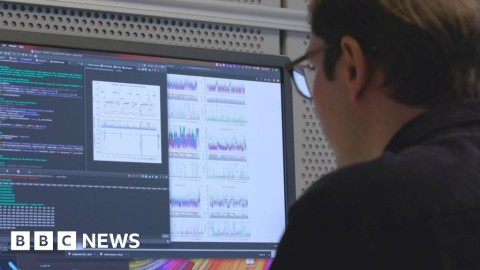
AI can forecast your future health – just like the weather
LinkedIn flagged it as spam.
- Not X.
- Not Facebook.
- Not Bluesky.
- Only LinkedIn.
And while LinkedIn eventually reviewed the post and restored it, the experience highlights something important about how AI moderation works — and how it sometimes doesn’t.
The Flag That Didn’t Fit
The original post contained:
- A short commentary on AI
- A link to a BBC News article
That’s it
- No sensationalism.
- No questionable sources.
- No AI‑generated clickbait.
Yet LinkedIn’s automated system labeled it as spam. The platform didn’t provide a reason, a category, or even a hint about what triggered the flag.
This is where the story becomes interesting — because the BBC is not exactly fringe journalism.
Why the BBC Link Matters
BBC News is one of the most trusted news organizations globally. Its editorial standards are rigorous, its reporting is widely cited, and its reputation is built on decades of credibility.
If a BBC link can be flagged as spam, then the issue isn’t the content — it’s the classifier.
This raises a broader question:
What happens when AI moderation becomes so sensitive that it misclassifies credible journalism? That’s not a hypothetical. It’s what happened here. To make sure the issue wasn’t with the article itself, I posted the same link on:
- X
- Blue Sky
All three platforms accepted it instantly. No warnings. No restrictions. No “spam” labels. This contrast is revealing. It shows that:
- The content wasn’t the problem
- The link wasn’t the problem
- The source wasn’t the problem
LinkedIn’s Reversal: A Good Sign, But Not the End of the Story
To LinkedIn’s credit, they reviewed the post and restored it. That’s the right outcome. But the reversal doesn’t erase the underlying issue — it highlights it.
AI moderation systems:
- Don’t understand context
- Don’t understand nuance
- Don’t understand credibility
- Don’t understand the intent
They understand patterns. And sometimes those patterns lead to false positives.
What This Incident Reveals About AI Moderation. This small incident is part of a much larger trend:
- AI moderation is increasingly opaque. Users rarely know why something was flagged.
- AI moderation is increasingly inconsistent. Different platforms treat the same content differently
- AI moderation is increasingly risk‑averse. To avoid misinformation, platforms sometimes overcorrect.
- AI moderation is increasingly influential. A single misclassification can bury a post, reduce visibility, or distort engagement.
This isn’t about one post. It’s about the systems shaping what we see online.
Why This Matters for Professionals
LinkedIn is a professional platform. Visibility matters. Credibility matters. The ability to share high‑quality journalism matters.
When legitimate posts get suppressed:
- Thought leadership suffers
- Conversations stall
- Credible information gets buried
- Users lose trust in the platform
The Article in Question:
AI can forecast your future health – just like the weather
Here’s how Google Gemini summarized the article for me:
The BBC article titled “AI can forecast your future health – just like the weather” details a breakthrough artificial intelligence model capable of anticipating a person’s risk of developing over 1,000 different diseases.
Here is a summary of the key points from the article:
1. How It Works
- The “Weather Forecast” Approach: Rather than predicting precise events or exact dates, the AI calculates long-term probabilities. For instance, it might determine a patient has a “70% chance” of developing a condition, closely mirroring how meteorologists forecast rain.
- Underlying Technology: The model—named Delphi-2M—is built on foundational architecture similar to LLM chatbots like ChatGPT. However, instead of being trained to predict the next word in a sentence, it was trained to find patterns in anonymous health data to predict a patient’s next likely clinical diagnosis and when it might manifest.
- Predictive Scope: Delphi-2M estimates individual risks for 1,231 distinct diseases simultaneously.
2. Development and Data
- Training Source: The AI was developed using the anonymous, extensive data of more than 400,000 participants within the UK Biobank research project.
- Data Points Analyzed: The system learns by cross-referencing vast timelines of medical histories, including hospital admissions, GP records, and lifestyle factors (such as smoking or dietary habits).
3. Ultimate Goals and Vision
- Preventative Medicine: Project leaders, including Prof. Ewan Birney (interim executive director of the European Molecular Biology Laboratory), express massive excitement over the technology. The primary goal is to spot high-risk patients years before symptoms appear, allowing doctors to step in early with preventative treatments.
- Healthcare Logistics: Beyond treating individual patients, the AI’s long-term forecasts are designed to help hospitals and public health networks accurately map out and prepare for healthcare demands years down the line.
Here’s the restore message from LinkedIn:
Your post is back on LinkedIn
Here’s what happened
We regularly review the removal of content to ensure our policies are applied in a fair and consistent way.Initially, your post was removed for going against our Professional Community Policies. As part of our review, we now find that your post doesn’t go against our policies and apologize for the mistake. Your post is back on LinkedIn.
Thank you for being part of the LinkedIn community.
Transparency matters — and this lets readers judge whether the content ever resembled “spam.”
Conclusion:
A Case Study in AI’s Growing Pains. This wasn’t a crisis. It wasn’t a scandal. It wasn’t even a major inconvenience.
But it was a case study.
A small example of how AI moderation can misfire, how platforms respond, and how these systems shape the flow of information online.
As AI becomes more embedded in content moderation, these kinds of incidents will become more common — and more important to understand.
And if nothing else, this experience shows one thing clearly: Even the BBC isn’t safe from an over‑eager algorithm.


Leave a Reply